
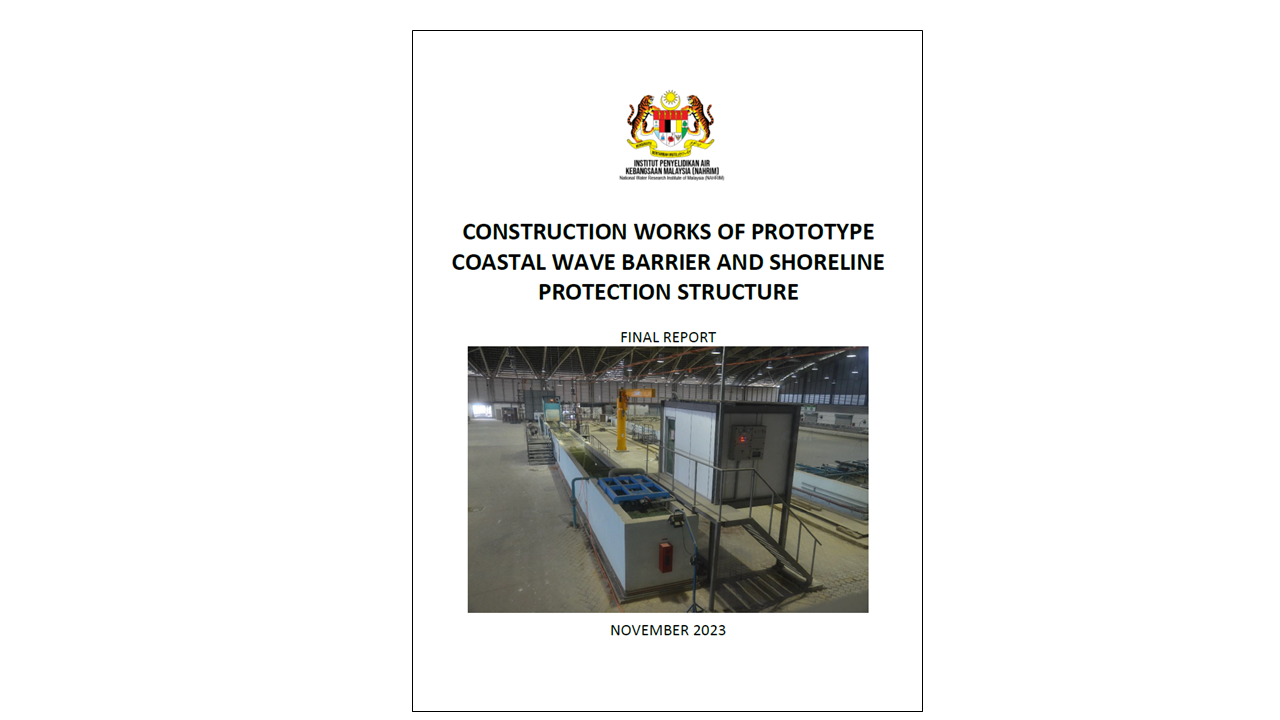
CONSTRUCTION WORKS OF PROTOTYPE COASTAL WAVE BARRIER AND SHORELINE PROTECTION STRUCTURE
Wave overtopping is a complex coastal phenomenon with significant implications for coastal communities and ecosystems. Studying and managing overtopping events are essential components of coastal management and engineering, helping to mitigate risks, protect infrastructure, and adapt to the challenges posed by a changing climate and dynamic coastal environments. The phenomenon of wave overtopping, which poses a significant concern in coastal regions, is experiencing an upward trend attributable to the effects of climate change-induced sea-level rise and the heightened intensity of storm occurrences (Chen et al., 2021). This phenomenon presents significant risks, such as the occurrence of floods, erosion, and infrastructure damage, which have adverse effects on the safety of coastal communities, the stability of ecosystems, and the economic prosperity of these areas. Overtopping can erode coastal land, undermining the stability of beaches, cliffs, and dunes. This leads to the loss of valuable coastal real estate and infrastructure. Besides that, coastal overtopping can result in the inundation of low-lying coastal areas, causing flooding in coastal communities. Over time, overtopping damages or weaken coastal defenses, such as seawalls, revetments, and dikes, which are designed to protect against erosion and flooding (Siegal, 2020). If located near estuaries or riverbanks, overtopping introduces saltwater into freshwater ecosystems, affecting local flora and fauna (Li and Plater, 2020). It also transports pollutants and debris into coastal waters, harming marine life and ecosystems. "Runup" in the context of coastal overtopping refers to the phenomenon where water from waves or storm surges rushes up the shoreline and inundates coastal areas beyond the normal waterline (CIRIA, 2007). It is a crucial concept in understanding and predicting the impacts of overtopping events along coastal regions. Wave runup is the vertical rise of water level on the beach or shoreline caused by the incoming waves. As waves approach the shore, they carry energy that pushes water up the beach slope. This elevated water level can extend significantly inland, depending on wave height, frequency, and the beach's slope. In addition to ordinary wave runup, wave overtopping can involve the combined effects of high waves and storm surges. A storm surge is a rapid, abnormal rise in sea level due to atmospheric pressure changes and strong winds associated with storms, such as hurricanes or cyclones. When waves and storm surges coincide, they can result in more extensive and higher runup, leading to flooding and erosion of coastal areas. Among several factors that influence the magnitude of runup during coastal overtopping events includes wave characteristics which involve the size, period, and direction of incoming waves (CIRIA, 2007). Larger and longer-period waves tend to produce higher runup. Besides that, the slope and shape of the beach or shoreline affect the runup. A steeper beach slope generally results in more significant runup. The strength and duration of the storm, as well as the storm surge's height, are also critical factors in runup. More intense storms with higher surges typically lead to more substantial runup.
Authors
Abstract
Wave overtopping is a complex coastal phenomenon with significant implications for coastal communities and ecosystems. Studying and managing overtopping events are essential components of coastal management and engineering, helping to mitigate risks, protect infrastructure, and adapt to the challenges posed by a changing climate and dynamic coastal environments. The phenomenon of wave overtopping, which poses a significant concern in coastal regions, is experiencing an upward trend attributable to the effects of climate change-induced sea-level rise and the heightened intensity of storm occurrences (Chen et al., 2021). This phenomenon presents significant risks, such as the occurrence of floods, erosion, and infrastructure damage, which have adverse effects on the safety of coastal communities, the stability of ecosystems, and the economic prosperity of these areas. Overtopping can erode coastal land, undermining the stability of beaches, cliffs, and dunes. This leads to the loss of valuable coastal real estate and infrastructure. Besides that, coastal overtopping can result in the inundation of low-lying coastal areas, causing flooding in coastal communities. Over time, overtopping damages or weaken coastal defenses, such as seawalls, revetments, and dikes, which are designed to protect against erosion and flooding (Siegal, 2020). If located near estuaries or riverbanks, overtopping introduces saltwater into freshwater ecosystems, affecting local flora and fauna (Li and Plater, 2020). It also transports pollutants and debris into coastal waters, harming marine life and ecosystems. "Runup" in the context of coastal overtopping refers to the phenomenon where water from waves or storm surges rushes up the shoreline and inundates coastal areas beyond the normal waterline (CIRIA, 2007). It is a crucial concept in understanding and predicting the impacts of overtopping events along coastal regions. Wave runup is the vertical rise of water level on the beach or shoreline caused by the incoming waves. As waves approach the shore, they carry energy that pushes water up the beach slope. This elevated water level can extend significantly inland, depending on wave height, frequency, and the beach's slope. In addition to ordinary wave runup, wave overtopping can involve the combined effects of high waves and storm surges. A storm surge is a rapid, abnormal rise in sea level due to atmospheric pressure changes and strong winds associated with storms, such as hurricanes or cyclones. When waves and storm surges coincide, they can result in more extensive and higher runup, leading to flooding and erosion of coastal areas. Among several factors that influence the magnitude of runup during coastal overtopping events includes wave characteristics which involve the size, period, and direction of incoming waves (CIRIA, 2007). Larger and longer-period waves tend to produce higher runup. Besides that, the slope and shape of the beach or shoreline affect the runup. A steeper beach slope generally results in more significant runup. The strength and duration of the storm, as well as the storm surge's height, are also critical factors in runup. More intense storms with higher surges typically lead to more substantial runup.
Citation
IR. TS. MUHAMMAD RIZAL RAZALI, SAIFUL BAHRI HAMZAH, SITI SALIHAH HJ MOHD SENDEK. 2023. CONSTRUCTION WORKS OF PROTOTYPE COASTAL WAVE BARRIER AND SHORELINE PROTECTION STRUCTURE. Digital NAHRIM Publication Repository.