
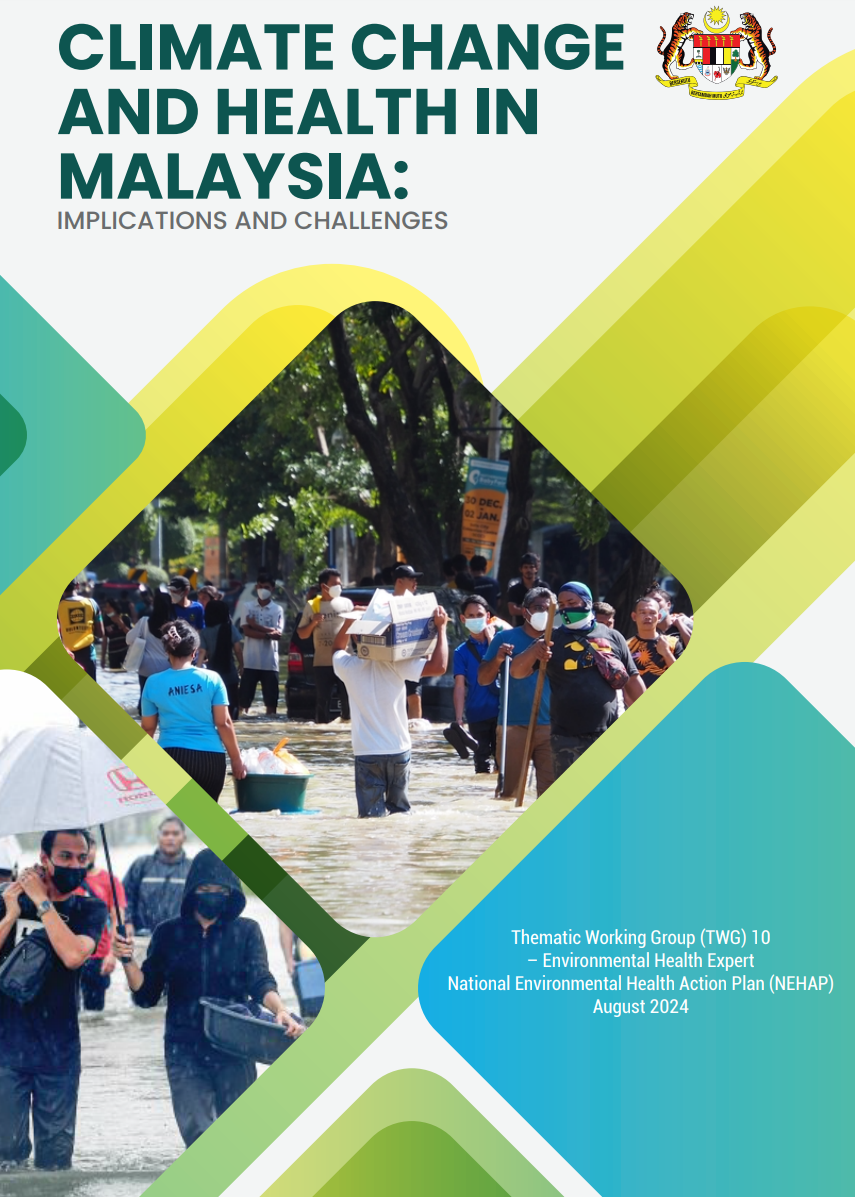
Climate Change And Health In Malaysia: Implications And Challenges
Climate change in Malaysia is a growing issue that affects facets of the country’s environment, society and economy. Southeast Asia, where Malaysia is situated is increasingly facing rising temperatures that are giving the country warmer weather on average, as well as changes in rainfall patterns and more extreme weather like floods and droughts. They pose risks to its biodiversity, agriculture and coastal communities. The country is also dealing with problems including rising sea-levels along a vast coastline and the disruption of natural ecosystems. While steps to mitigate its impact, through the introduction of policies on deeds which reduce greenhouse gas emissions and seek greater resilience in Malaysia as well as best efforts are worthwhile, it is a very complicated puzzle that needs ongoing attention to fix. This assertion is supported by the range of commitments that Malaysia has made under different components and workstreams of the Paris Agreement, supplemented by a collection of strategic national policies and institutional arrangements for addressing both climate change mitigation as well as adaptation. Important steps also included the establishing of Nationally Determined Contributions (NDC), setting reduction targets and adaptation plans. Other country such as the Philippines has repeatedly faced the threat of a changing climate, with disasters like the extended El Niño drought in 1998 and recent heat waves serving as reminders that it is one of country´s most vulnerable to extreme weather. MET Malaysia is an agency under the Ministry providing information on weather phenomena, climate issues and severe climatic events to assist in implementation of policy. The rise in vector-borne diseases and heat-related illnesses calls for both immediate actions by society and long-term, strategic efforts that bring together the government, private sector, and community. This document is intended to provide responses to global commitment over climatic challenges and to share more of the insights that can help inform the policy makers, stakeholders and public in general with a hope to make AMP approach for climate action much more informed and proactive. Through documenting the progress made in Malaysia and pointing to areas where improvement can still be achieved, it is intended that this book will provide some input towards better climate policies which are more effective (i.e. reduced exposure) and sustainable (containing high frequency / low severity events)—policies which enhance resilience rather than impact on the environment further downstream.
Authors
Abstract
Climate change in Malaysia is a growing issue that affects facets of the country’s environment, society and economy. Southeast Asia, where Malaysia is situated is increasingly facing rising temperatures that are giving the country warmer weather on average, as well as changes in rainfall patterns and more extreme weather like floods and droughts. They pose risks to its biodiversity, agriculture and coastal communities. The country is also dealing with problems including rising sea-levels along a vast coastline and the disruption of natural ecosystems. While steps to mitigate its impact, through the introduction of policies on deeds which reduce greenhouse gas emissions and seek greater resilience in Malaysia as well as best efforts are worthwhile, it is a very complicated puzzle that needs ongoing attention to fix. This assertion is supported by the range of commitments that Malaysia has made under different components and workstreams of the Paris Agreement, supplemented by a collection of strategic national policies and institutional arrangements for addressing both climate change mitigation as well as adaptation. Important steps also included the establishing of Nationally Determined Contributions (NDC), setting reduction targets and adaptation plans. Other country such as the Philippines has repeatedly faced the threat of a changing climate, with disasters like the extended El Niño drought in 1998 and recent heat waves serving as reminders that it is one of country´s most vulnerable to extreme weather. MET Malaysia is an agency under the Ministry providing information on weather phenomena, climate issues and severe climatic events to assist in implementation of policy. The rise in vector-borne diseases and heat-related illnesses calls for both immediate actions by society and long-term, strategic efforts that bring together the government, private sector, and community. This document is intended to provide responses to global commitment over climatic challenges and to share more of the insights that can help inform the policy makers, stakeholders and public in general with a hope to make AMP approach for climate action much more informed and proactive. Through documenting the progress made in Malaysia and pointing to areas where improvement can still be achieved, it is intended that this book will provide some input towards better climate policies which are more effective (i.e. reduced exposure) and sustainable (containing high frequency / low severity events)—policies which enhance resilience rather than impact on the environment further downstream.
Citation
SAIFUL BAHRI HAMZAH, YANNIE ANAK BENSON, IR. DR. LEE HIN LEE. 2024. Climate Change And Health In Malaysia: Implications And Challenges. Digital NAHRIM Publication Repository.